
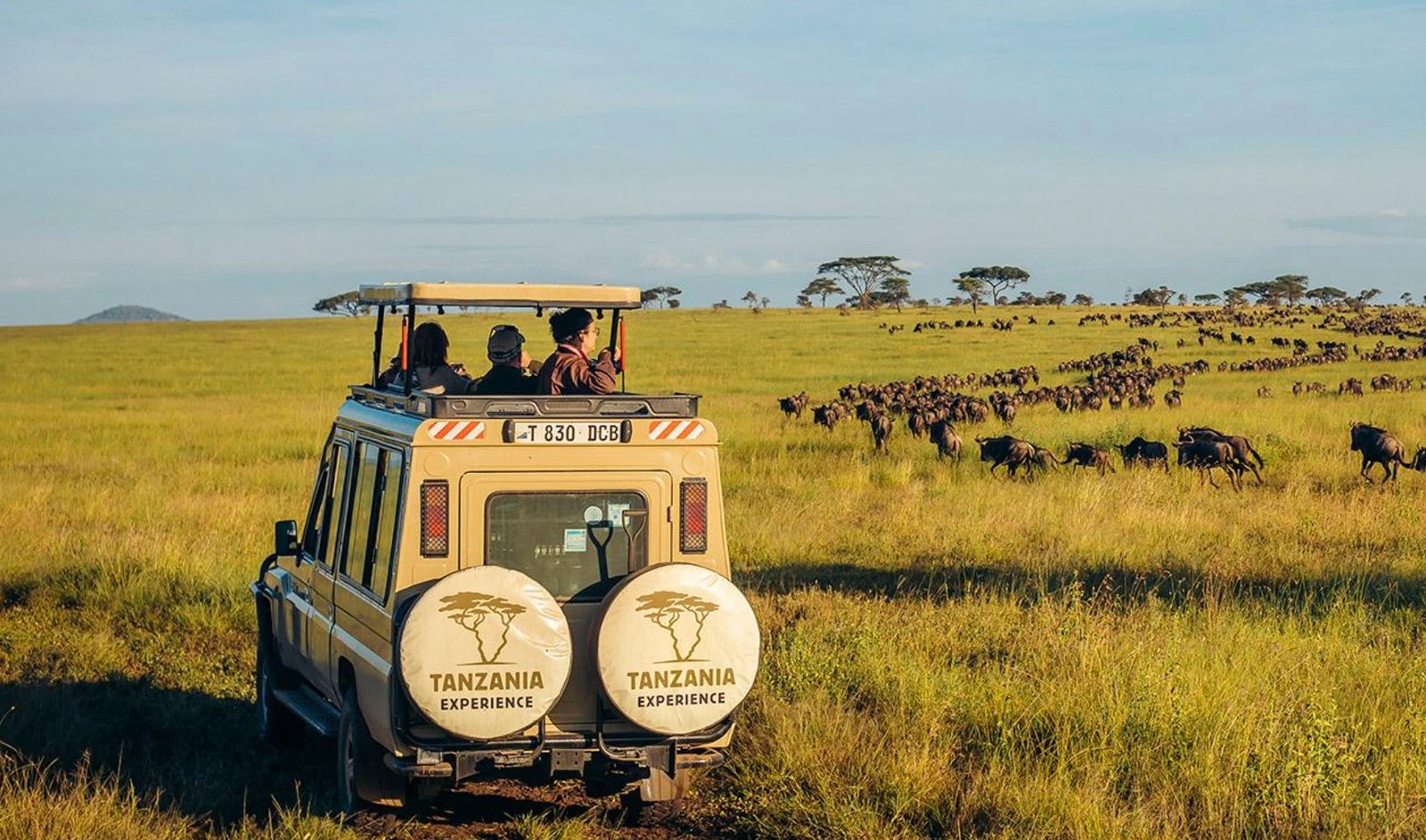
The Serengeti National Park in northern Tanzania is one of the most iconic wildlife destinations in the world. Known for its endless golden plains, vast herds of wildebeest, and dramatic predator-prey interactions, the Serengeti is often described as the heartbeat of Africa’s wilderness. A UNESCO World Heritage Site and one of the Seven Natural Wonders of Africa, it is a place where nature unfolds on an epic scale, offering visitors an unforgettable safari experience.
A Glimpse of the Serengeti
- Location: Northern Tanzania, extending into southwestern Kenya (where it becomes the Maasai Mara).
- Size: About 14,750 square kilometers (larger than some countries).
- Fame: The Great Wildebeest Migration, Africa’s largest mammal movement.
- Established: Declared a national park in 1951.
The word Serengeti comes from the Maasai language “Siringet,” meaning “endless plains.” It is an apt description: the horizon stretches endlessly, dotted with acacia trees, kopjes (rocky outcrops), and teeming wildlife.
The Great Migration – Nature’s Greatest Show
The Serengeti is synonymous with the Great Migration, a natural spectacle unlike any other on Earth. Each year, over 1.5 million wildebeest, accompanied by hundreds of thousands of zebras and gazelles, travel in a circular journey of more than 1,800 miles in search of fresh grazing and water.
The Migration Cycle
- December – March: Calving season in the southern Serengeti near Ndutu. Thousands of wildebeest calves are born, attracting predators like lions, cheetahs, and hyenas.
- April – May: Herds move northwest as rains fade, creating dramatic scenes of animals on the march.
- June – July: The Grumeti River crossing, where crocodiles lurk, provides thrilling drama.
- August – October: The Mara River crossings into Kenya’s Maasai Mara are the most famous – a life-or-death struggle as wildebeest leap into crocodile-infested waters.
- November: Herds move back south, completing the cycle.
The Great Migration is not just about movement – it’s a story of survival, resilience, and the delicate balance of nature.
Wildlife Beyond the Migration
While the migration is the Serengeti’s headline act, the park is home to an incredible variety of wildlife year-round.
- The Big Five: Lions, elephants, leopards, buffalo, and rhinos. Serengeti has Africa’s largest lion population (over 3,000).
- Predators: Cheetahs, spotted hyenas, jackals, and African wild dogs thrive here.
- Herbivores: Giraffes, elands, impalas, topis, hartebeests, and hippos.
- Birdlife: Over 500 bird species, from ostriches and kori bustards to colorful bee-eaters.
The sheer density of animals makes the Serengeti one of the best places in the world for wildlife photography and safari adventures.
Landscapes of the Serengeti
The Serengeti is not uniform – its landscapes are as diverse as its wildlife:
- Southern Serengeti Plains: Wide-open grasslands where the migration begins and calving season takes place.
- Central Serengeti (Seronera): Famous for big cats, especially leopards lounging in acacia trees.
- Western Corridor: Home to the Grumeti River and dramatic crocodile encounters.
- Northern Serengeti: Less visited, but the stage for the Mara River crossings.
- Kopjes (rock outcrops): Ancient granite formations that serve as lookouts for lions and hiding spots for smaller animals.
Things to Do in the Serengeti
- Game Drives – Morning and evening drives reveal predators hunting, herds grazing, and breathtaking landscapes.
- Hot Air Balloon Safari – A once-in-a-lifetime experience, floating above the plains at sunrise.
- Walking Safaris – Guided treks for those seeking a deeper connection with the land.
- Cultural Visits – Meet the Maasai people, known for their traditions and resilience in living alongside wildlife.
- Birdwatching – Spot raptors, storks, flamingos (in nearby lakes), and other unique species.
When to Visit
- Best for Calving Season: January – March (southern Serengeti).
- Best for River Crossings: June – October (Grumeti and Mara rivers).
- Year-round: The Serengeti always has abundant wildlife, even outside migration highlights.
Accommodation Options
The Serengeti offers a wide range of stays:
- Luxury Lodges: &Beyond Serengeti Under Canvas, Four Seasons Safari Lodge.
- Mid-range Tented Camps: Comfortable with modern amenities.
- Budget Camping: Public campsites for adventurous travelers.
Many accommodations are mobile camps that move seasonally to follow the migration.
Conservation Importance
The Serengeti is not just a tourist attraction – it is a critical conservation area. Protecting the migration and wildlife ensures ecological balance across East Africa. Threats such as poaching, climate change, and human encroachment highlight the importance of ongoing conservation efforts led by Tanzania National Parks (TANAPA) and global organizations.
Why the Serengeti is Special
What makes the Serengeti extraordinary is not just the number of animals but the way they interact within vast, untouched landscapes. It’s a place where you can watch a lion hunt at dawn, witness wildebeest crossing crocodile-infested rivers at noon, and see giraffes silhouetted against a fiery sunset.
For many, the Serengeti is the ultimate safari dream – a living reminder of what the natural world once looked like before human interference.
Final Thoughts
The Serengeti is more than a national park – it is a timeless wilderness, a natural wonder where life and death play out on a grand stage. To visit the Serengeti is to witness nature in its rawest, purest form – a place where the cycle of life continues as it has for millennia.
For anyone with a love for wildlife, adventure, and natural beauty, the Serengeti is not just a destination – it is a pilgrimage to the very heart of Africa.