
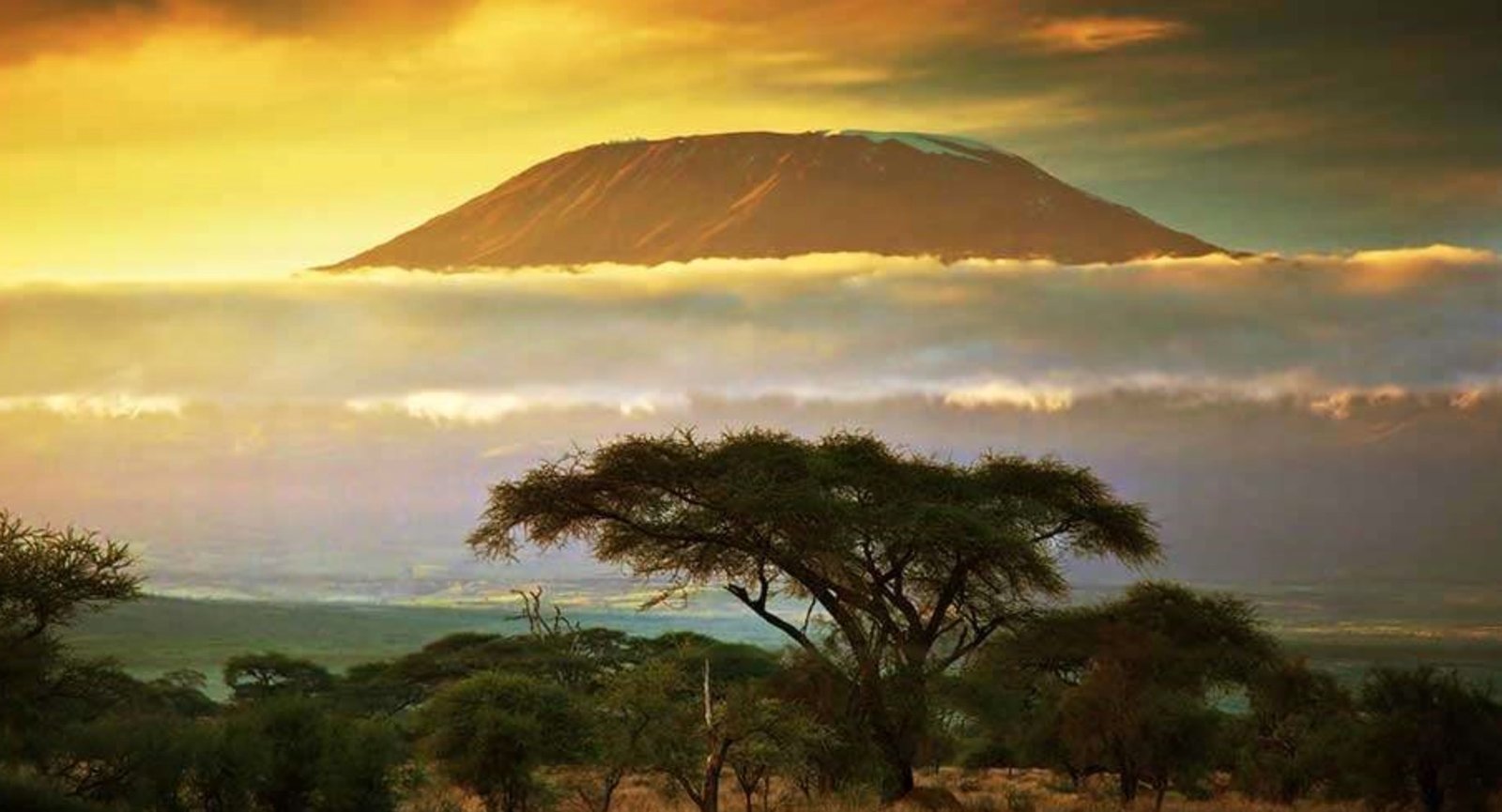
Standing tall at 5,895 meters (19,341 feet) above sea level, Mount Kilimanjaro is the highest mountain in Africa and the tallest free-standing mountain on Earth. Located in northeastern Tanzania, near the border with Kenya, Kilimanjaro is one of the world’s most iconic peaks – a majestic giant crowned with glaciers and snow, rising dramatically from the surrounding savannah. It is a destination that combines adventure, natural beauty, and cultural richness, making it a dream for trekkers, climbers, and nature enthusiasts from across the globe.
The Mountain at a Glance
- Location: Kilimanjaro Region, Tanzania.
- Height: 5,895 meters (19,341 feet).
- Status: The highest mountain in Africa; part of the Seven Summits.
- Type: Dormant stratovolcano with three volcanic cones – Kibo, Mawenzi, and Shira.
Kilimanjaro is more than just a mountain – it is a symbol of Africa’s beauty and resilience, immortalized in literature, songs, and the famous Ernest Hemingway story “The Snows of Kilimanjaro.”
The Volcanic Cones
- Kibo: The central cone and the highest point, home to Uhuru Peak, Kilimanjaro’s summit. Kibo is dormant but not extinct – it last erupted about 360,000 years ago.
- Mawenzi: The rugged, jagged cone standing at 5,149 meters, popular among technical climbers.
- Shira: The oldest cone, now largely eroded, forming a plateau at about 3,962 meters.
Unique Ecosystems
One of Kilimanjaro’s most fascinating features is the diversity of ecosystems found on its slopes. Climbing the mountain is like traveling from the equator to the Arctic in just a few days.
- Cultivation Zone (800 – 1,800m): Fertile farmland with coffee, bananas, and maize.
- Montane Forest (1,800 – 2,800m): A lush rainforest alive with monkeys, antelopes, and birds.
- Heather and Moorland (2,800 – 4,000m): Shrubs, giant groundsels, and unique plants adapted to the altitude.
- Alpine Desert (4,000 – 5,000m): Harsh, dry landscape with little vegetation, extreme temperatures, and vast views.
- Arctic Zone (above 5,000m): Snowfields and glaciers, where oxygen is scarce and conditions are icy.
This ecological diversity makes Kilimanjaro not just a climb, but a journey through some of the most unique natural environments in the world.
Climbing Kilimanjaro
Every year, tens of thousands of climbers attempt to reach Uhuru Peak. Unlike many other mountains of its size, Kilimanjaro does not require technical climbing skills, making it accessible to adventurous travelers with determination, proper preparation, and guided support.
Popular Climbing Routes
- Marangu Route (5–6 days): Known as the “Coca-Cola Route,” it’s the only route with hut accommodations.
- Machame Route (6–7 days): Scenic and challenging, nicknamed the “Whiskey Route.”
- Lemosho Route (7–8 days): Highly recommended for its beauty and acclimatization profile.
- Rongai Route (6–7 days): Approaches from the north, quieter and less crowded.
- Umbwe Route (6–7 days): Steep and direct, suitable for experienced climbers.
- Northern Circuit (8–9 days): The longest and newest route, excellent for acclimatization.
Challenges of the Climb
The biggest challenge on Kilimanjaro is not technical difficulty but altitude sickness. With proper acclimatization, pacing (“pole pole” in Swahili, meaning “slowly”), and hydration, climbers increase their chances of reaching the summit.
The Glaciers of Kilimanjaro
Kilimanjaro’s ice cap has been shrinking rapidly due to climate change. Scientists estimate that about 80% of the glacier mass has disappeared in the last century. If trends continue, Kilimanjaro’s iconic white summit may vanish within the next few decades, making climbing the mountain an even more urgent experience for travelers today.
Wildlife Around Kilimanjaro
While the mountain itself is too cold for most animals near the top, its lower slopes and surrounding areas host a variety of wildlife:
- Elephants, buffalo, and leopards in the montane forests.
- Colobus and blue monkeys among the trees.
- Over 180 bird species, including turacos, sunbirds, and hornbills.
Kilimanjaro National Park protects these ecosystems, ensuring that wildlife thrives alongside trekking activities.
Cultural Significance
Kilimanjaro is deeply woven into the lives of local communities, including the Chagga people, who live on the fertile lower slopes. The mountain is a source of water, fertile farmland, and cultural identity. In Chagga folklore, Kilimanjaro is a sacred mountain, often associated with spirits and myths.
It also holds a place of pride for Tanzanians – appearing on the country’s coat of arms, banknotes, and even in the national anthem.
When to Climb Kilimanjaro
- Best Time: January–March (cooler, less crowded) and June–October (dry, clear skies).
- Avoid: April–May (long rains) and November (short rains), unless you prefer fewer tourists.
Accommodation
- On the Mountain: Options vary depending on the route – from huts (Marangu) to tents (Machame, Lemosho, Rongai).
- Before/After the Climb: Nearby towns like Moshi and Arusha offer hotels, lodges, and hostels catering to all budgets.
Why Kilimanjaro Should Be on Your Bucket List
Climbing Kilimanjaro is not just about reaching the summit – it’s about the journey. Few places on Earth allow you to walk through five ecosystems in less than a week, witness breathtaking sunrises above the clouds, and stand on the “Roof of Africa.”
It is a test of endurance, spirit, and determination, but also a deeply rewarding experience. Whether you’re a seasoned mountaineer or an adventurous traveler, Kilimanjaro offers one of the most unforgettable adventures on the planet.
Final Thoughts
Mount Kilimanjaro is more than just a mountain – it is a symbol of Africa’s grandeur, a natural wonder shaped by fire and ice, and a challenge that calls out to the adventurous soul. Standing at Uhuru Peak, watching the sun rise over the endless African plains, is a moment that leaves climbers forever changed.
If there is one mountain you should climb in your lifetime, let it be Kilimanjaro – Africa’s mighty giant.